
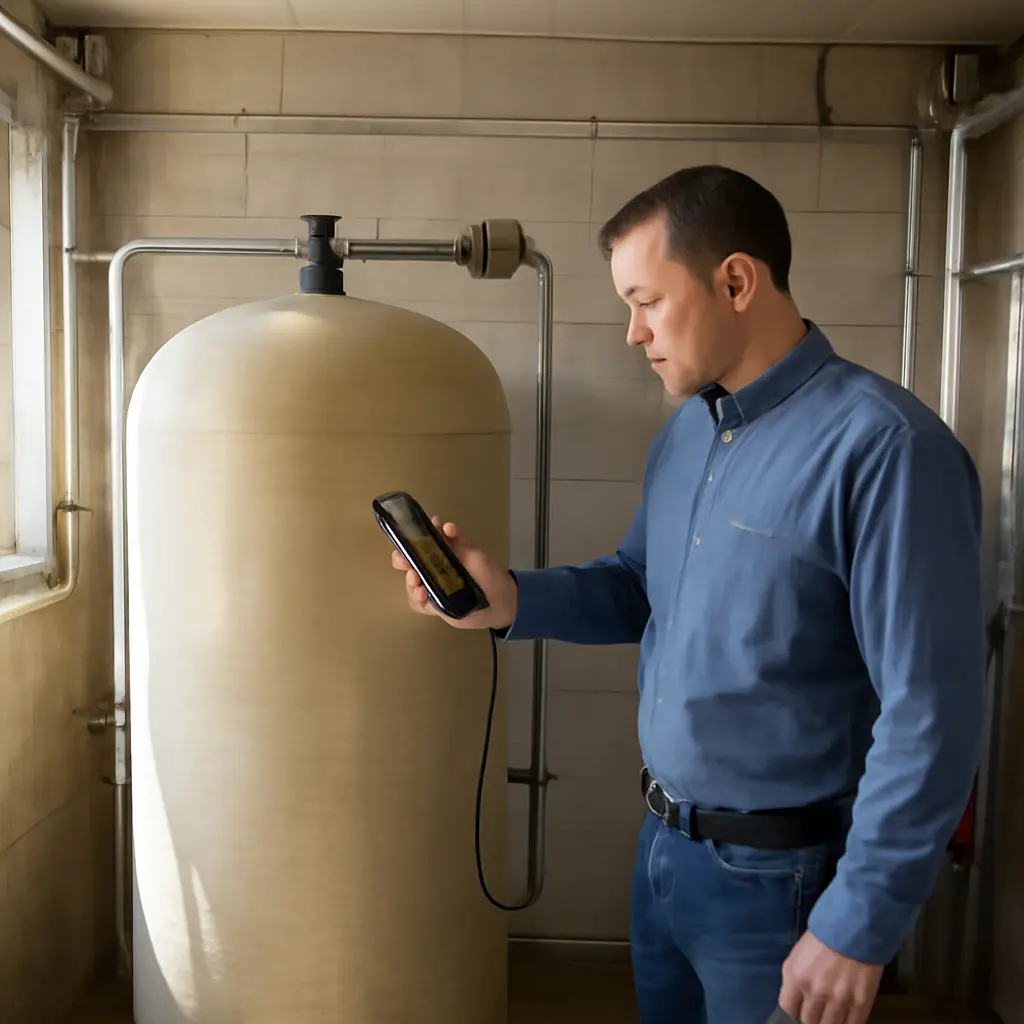
Integrated disinfection is the coordinated use of multiple controls—such as water treatment, equipment sanitation, environmental monitoring, and operational procedures—to reduce microbial risks in storage systems. For water tanks, food and beverage vessels, and other storage infrastructure, it changes security from a one-time cleaning task into a continuing, risk-based process. That matters because contamination can persist or re-enter after treatment: the U.S. Environmental Protection Agency (EPA) requires public water systems to maintain a disinfectant residual in distribution systems, while the Centers for Disease Control and Prevention (CDC) identifies Legionella growth and spread as risks in building water systems. Effective storage security therefore depends on barriers working together, verification through testing, and prompt corrective action—not on disinfection alone.
How integrated disinfection strengthens storage security
“Integrated disinfection” is a practical description of a layered control strategy, rather than a single universally standardized treatment. It brings together physical cleaning, one or more validated disinfection methods, prevention of recontamination, and monitoring matched to the stored material and system design. The World Health Organization (WHO) frames safe drinking-water management around preventive risk assessment and control from source to consumer; the same principle applies inside storage assets, where incoming quality, tank condition, residence time, and downstream use all influence risk.
The approach is relevant wherever stored water or products can support microbial survival or growth. A tank may be disinfected correctly and still become unsafe if sediment shelters organisms, a hatch admits contaminants, or water stagnates. Integrated controls address these failure pathways as a connected system.
The layers of an integrated program
A robust program typically combines several complementary measures:
- Prevention: protect the source, use sanitary design, secure openings, and prevent cross-connections or backflow.
- Physical removal: drain and clean deposits, biofilm, and debris that can shield microorganisms or consume disinfectant.
- Disinfection: apply an appropriate chemical or physical treatment at a validated dose and exposure time.
- Residual protection: where appropriate, maintain a disinfectant residual to help control microbial regrowth after treatment.
- Verification and response: monitor operational indicators, conduct suitable microbiological tests, and act on results.
These are not interchangeable steps. Filtration can reduce particles but does not necessarily inactivate pathogens; disinfection can inactivate susceptible organisms but may not remove dirt or chemical contaminants. The WHO’s drinking-water guidance accordingly emphasizes multiple barriers rather than reliance on a single treatment stage.
Why a one-time disinfection is not enough
Disinfection performance depends on the target organism, treatment concentration, contact time, temperature, pH, and water quality. Organic matter and sediment can reduce treatment effectiveness, while biofilms can protect microorganisms on tank surfaces. After a treatment event, contamination may also enter through damaged covers, vents, plumbing connections, or maintenance activity.
The EPA’s drinking-water rules illustrate the importance of ongoing control: under the Surface Water Treatment Rules, covered public water systems must meet treatment and disinfection requirements, and applicable systems must maintain a detectable disinfectant residual in the distribution system. Requirements vary by system type and regulation, so operators should consult the rules that apply to their facility rather than treating a general benchmark as a universal standard.
What integrated disinfection means for storage security
Storage security means preserving the safety and intended quality of stored water or product against contamination, deterioration, unauthorized access, and operational failure. The CDC’s guidance on Legionella in building water systems highlights why storage conditions matter: Legionella can grow in building plumbing, including tanks and other parts of complex water systems, when conditions support its growth and spread. Integrated disinfection connects treatment to system design, temperature and flow management, maintenance, and monitoring.
Water storage: residuals, turnover, and tank integrity
For potable-water storage, security depends on both microbiological control and physical integrity. Operators should inspect roofs, access points, vents, overflows, screens, coatings, and seals; manage sediment; and avoid excessive stagnation. Water turnover and disinfectant residuals should be managed in line with applicable public-health requirements and the system’s design. A residual measurement is useful operational evidence, but it does not by itself prove that every part of a tank is free of contamination.
The EPA’s Revised Total Coliform Rule uses total coliforms as indicators of possible distribution-system contamination and requires follow-up actions when specified monitoring results occur. This illustrates a broader principle: routine indicators can reveal when a barrier may have failed, but they need to be interpreted within a sampling and response plan.
Building water systems: controlling Legionella risk
In large buildings, hospitals, hotels, and other facilities, disinfection must be coordinated with water management. CDC recommends that building owners develop a water management program when building characteristics and potential exposure risks warrant one. Such programs assess where Legionella could grow or spread, identify control measures, set monitoring practices, and define responses when controls are not met.
A storage tank cannot be managed in isolation from the pipes and fixtures it serves. Water age, temperature, disinfectant levels, scale, and biofilm can vary across a building. A well-designed program therefore links tank inspection and treatment to system-wide flushing, temperature management, maintenance, and risk-based sampling, as appropriate to the facility.
Food, beverage, and other product storage
For food and beverage operations, the relevant “storage security” goal is to prevent contamination of product-contact surfaces and preserve product safety and quality. The U.S. Food and Drug Administration’s Current Good Manufacturing Practice requirements call for sanitary operations, including cleaning and sanitizing food-contact surfaces as appropriate. The correct method depends on the product, surface material, process, and applicable regulations; chemicals approved for one use should not be assumed suitable for another.
Integrated programs pair cleaning and sanitizing with hygienic equipment design, controlled chemical handling, documented procedures, and verification. This distinction matters: cleaning removes soil, while sanitizing or disinfecting reduces microorganisms under defined conditions. In industrial settings, operators should follow validated procedures and product labels, and ensure residues do not compromise the stored material.
How to design and verify an integrated disinfection program
An effective program begins with a risk assessment, not with selecting a disinfectant. The assessment should identify what is stored, who or what may be exposed, how contamination could enter or grow, and which regulations and technical standards apply. The WHO’s Water Safety Plan approach provides a structured model: assess hazards, prioritize risks, implement controls, and periodically review whether the system remains safe.
Choose treatment for the hazard and the system
Common disinfection options include chlorine-based chemicals, chloramine, chlorine dioxide, ultraviolet light, ozone, and thermal treatment. Each has limits. UV treatment does not provide a lasting residual; chemical disinfectants can be affected by water chemistry and may form regulated by-products; heat may be impractical for large systems or temperature-sensitive products. Selection should account for the target organisms, contact conditions, materials compatibility, operator safety, and legal requirements.
For public drinking water, the EPA regulates disinfectants and disinfection by-products under the Stage 1 and Stage 2 Disinfectants and Disinfection Byproducts Rules. These rules reflect the need to balance microbial protection with control of chemical by-products. Facilities should use the applicable regulatory framework and qualified technical advice to establish treatment limits.
Monitor controls and document corrective action
Verification should combine operational checks—such as residual disinfectant, temperature, turbidity, flow, or treatment-system status—with microbiological sampling when justified by the system’s risk assessment and regulatory obligations. Sampling plans need clear locations, frequencies, methods, and response thresholds. Results are most useful when linked to predefined actions, such as inspecting a tank, restoring a treatment barrier, flushing a section, or notifying the relevant authority.
Documentation turns individual measurements into a usable security record. Logs should capture treatment conditions, inspections, cleaning, maintenance, sampling results, deviations, and corrective actions. Trend review can reveal recurring problems—such as declining residuals or repeated contamination at the same outlet—before they become larger failures.
Use a practical storage-security checklist
- Map the storage system, its users, and possible contamination routes.
- Set cleaning and disinfection procedures suited to the stored material and equipment.
- Protect openings and connections, and inspect structural condition routinely.
- Control stagnation and other conditions that could support microbial growth.
- Monitor the critical operating indicators and sample according to risk and regulation.
- Define who responds to failures, what corrective actions are required, and how effectiveness is confirmed.
Conclusion: integrated disinfection makes storage security continuous
Integrated disinfection changes storage security by joining prevention, physical cleaning, treatment, residual or other ongoing controls, and verification into one managed system. For water tanks, building plumbing, and product-storage operations, a successful treatment event is only one part of protection. The surrounding infrastructure, operating conditions, monitoring, and response procedures determine whether safety persists.
The practical next step is to assess the specific storage system against its hazards and governing requirements, then document controls and corrective actions. Operators can consult EPA drinking-water regulations, CDC building-water guidance, FDA sanitation requirements where applicable, and WHO water-safety planning materials. A qualified water or sanitation professional can help translate that guidance into a site-specific program.
Sources: U.S. Environmental Protection Agency, National Primary Drinking Water Regulations, https://www.epa.gov/ground-water-and-drinking-water/national-primary-drinking-water-regulations; U.S. Environmental Protection Agency, Surface Water Treatment Rules, https://www.epa.gov/dwreginfo/surface-water-treatment-rules; U.S. Environmental Protection Agency, Revised Total Coliform Rule and Total Coliform Rule, https://www.epa.gov/dwreginfo/revised-total-coliform-rule-and-total-coliform-rule; U.S. Environmental Protection Agency, Stage 1 and Stage 2 Disinfectants and Disinfection Byproducts Rules, https://www.epa.gov/dwreginfo/stage-1-and-stage-2-disinfectants-and-disinfection-byproducts-rules; Centers for Disease Control and Prevention, Developing a Water Management Program to Reduce Legionella Growth and Spread in Buildings, https://www.cdc.gov/control-legionella/php/wmp/index.html; World Health Organization, Guidelines for Drinking-water Quality: Fourth Edition Incorporating the First and Second Addenda, https://www.who.int/publications/i/item/9789240045064; U.S. Food and Drug Administration, Current Good Manufacturing Practice, Hazard Analysis, and Risk-Based Preventive Controls for Human Food, https://www.ecfr.gov/current/title-21/chapter-I/subchapter-B/part-117.