
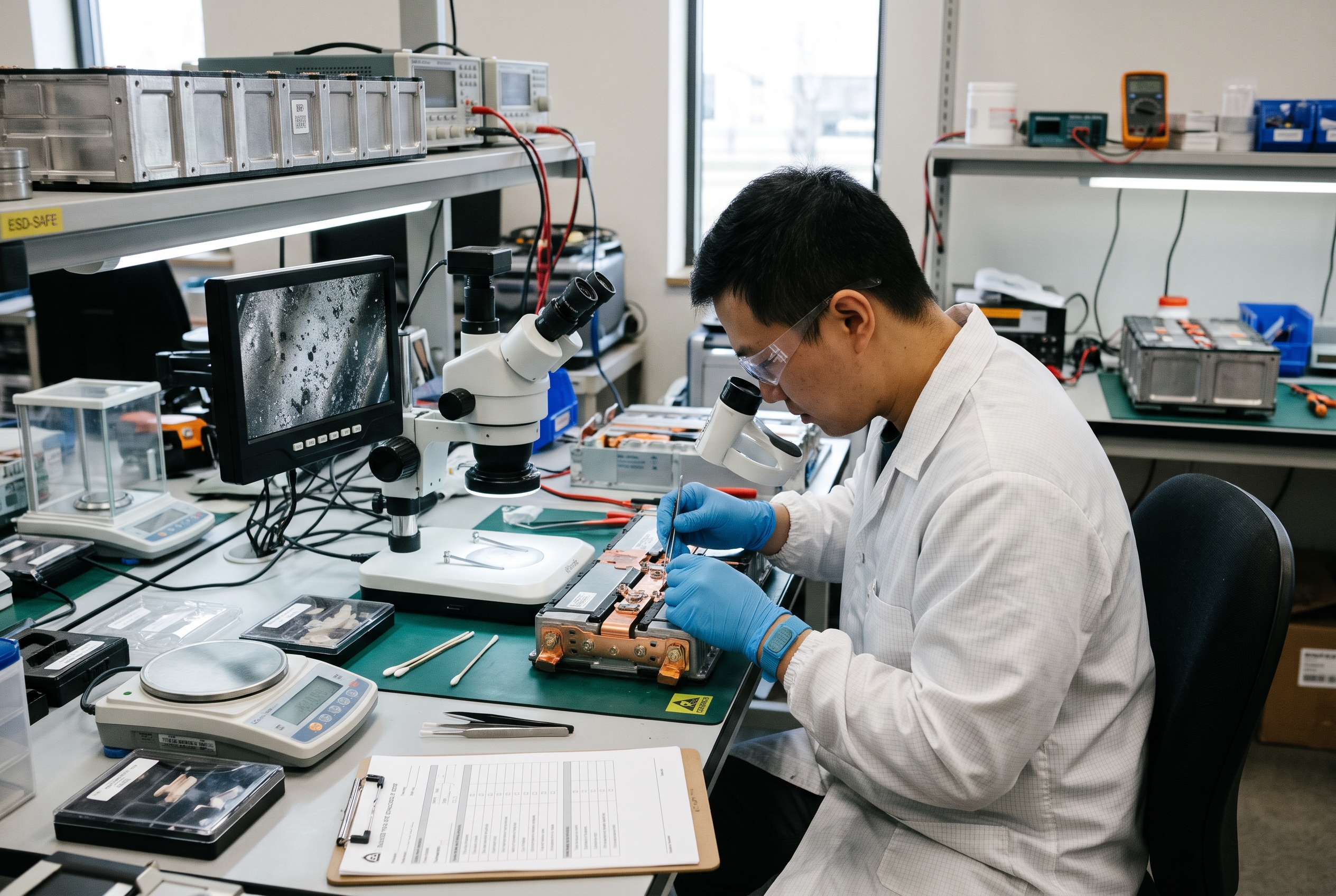
As electronic assemblies and electric vehicle power modules pack higher voltages into smaller enclosures, microscopic manufacturing debris has become a leading cause of sudden field failures. A single stray metallic machining burr, solder sphere, or conductive fiber bridging two closely spaced busbars or fine pitch circuit traces can trigger electrical arcing, parasitic current leakage, or thermal runaway. Implementing a routine cleanliness test across component machining and final assembly lines detects and quantifies harmful particulate and ionic residues before modules are sealed and shipped.
By extracting surface contaminants into controlled wash fluids and analyzing particle size distributions alongside conductive residue levels, quality engineers maintain strict contamination control across high reliability manufacturing environments.
Critical Contamination Risks Identified Through Laboratory Extraction
Modern electronics and e mobility assemblies face distinct failure mechanisms driven by microscopic assembly residues.
- Conductive Metallic Burr and Machining Chip Bridging: Stamped copper busbars, cast aluminum inverter housings, and threaded fasteners often retain microscopic metal shavings along edges and blind holes. During vehicle vibration, loose conductive particles migrate across insulating gaps and cause immediate short circuits.
- Solder Ball and Reflow Spatter Accumulation: Automated surface mount reflow and selective wave soldering can leave microscopic tin lead or lead free solder spheres adhering loosely to board surfaces. When dislodged by thermal cycling, these conductive spheres bridge adjacent component leads.
- Corrosive Ionic Flux and Plating Residues: Incomplete cleaning after soldering or electroplating leaves behind halide ions and weak organic acids. Under humid operating conditions, these ionic residues absorb moisture, lower surface insulation resistance, and drive electrochemical dendritic growth between circuit tracks.
- Fibrous and Non Conductive Insulator Fouling: Packaging lint, cardboard fibers, and polymer shavings can lodge inside relay contacts, optical sensor lenses, or thermal interface layers, causing intermittent open circuits or localized overheating.
High Reliability Manufacturing Sectors Enforcing Cleanliness Verification
Strict particulate and ionic cleanliness thresholds protect product safety and warranty performance across precision industries.
- Electric Vehicle Battery Pack and Busbar Fabricators: Producers of battery cell interconnects, cooling plates, and high voltage junction boxes audit stamped and welded parts to eliminate conductive debris inside sealed battery enclosures.
- Automotive Power Electronics and Inverter Assemblers: Tier one suppliers building traction inverters, onboard chargers, and DC to DC converters enforce strict maximum metallic particle size limits to safeguard high voltage creepage and clearance distances.
- Printed Circuit Board Assembly and Semiconductor Packagers: Electronics contract manufacturers verify post wash board cleanliness to prevent dendritic shorting and conformal coating delamination in safety critical control modules.
- Medical Device and Aerospace Electronics Producers: Manufacturers of implantable electronics, diagnostic instruments, and avionics modules maintain documented cleanliness baselines to satisfy stringent regulatory traceability audits.
Eliminating conductive metallic debris and residual assembly contaminants safeguards high voltage circuits and precision electronic boards from catastrophic field failures. By commissioning a certified cleanliness test through an Alstesting Laboratory Testing service in Malaysia, electronics assemblers and electric vehicle component producers gain verified particulate diagnostics to uphold strict global manufacturing quality standards across Southeast Asia.
Frequently Asked Questions (FAQ)
Why are metallic particles far more dangerous than non metallic particles in electric vehicle assemblies?
Non metallic particles such as dust or polymer fibers rarely conduct electricity unless they trap moisture or block mechanical contacts. Metallic particles such as aluminum, copper, or steel shavings are electrically conductive and can instantly bridge high voltage terminals or fine pitch circuit traces, causing short circuits and arcing.
How does ionic contamination lead to electrochemical migration on a circuit board?
When ionic residues such as chlorides, bromides, or flux activators remain on a board surface, they dissolve into microscopic moisture films formed during high humidity operation. Under an applied voltage bias, metal ions dissolve from the anode and plate out toward the cathode, growing conductive metallic dendrites that eventually short the circuit.
What is the difference between gravimetric analysis and optical particle sizing in cleanliness testing?
Gravimetric analysis weighs the total mass of all extracted particles collected on a filter membrane, providing an overall contamination load figure. Optical microscopy sizing counts and measures the exact length and width of every individual particle, distinguishing large high risk metallic shards from harmless fine dust.
Tags: cleanliness test